What Is Category 5 in Hospital?
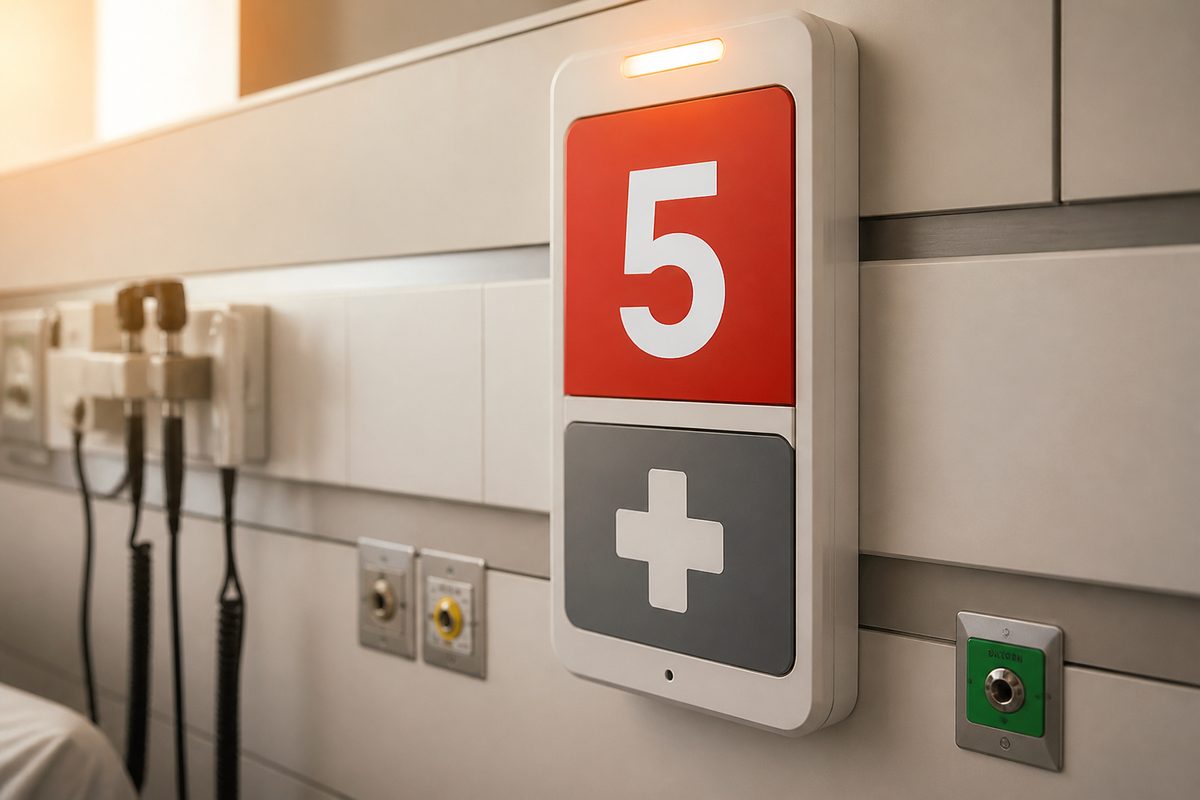
In an Australian hospital, Category 5 is the lowest urgency level on the triage scale, meaning a nurse has assessed your problem as non-urgent. It doesn't mean you're being ignored. It doesn't mean nothing is wrong. It means that, at the time of assessment, your condition didn't look like a threat to life or likely to get worse fast, so sicker people are seen first. This article is general information only. It's not medical advice, and it can't diagnose or assess anyone.
If you think you or someone else is in danger, call 000 now. For health advice, healthdirect is available on 1800 022 222, and Queensland readers can call 13 HEALTH. After Hours Care Guide is an independent guide to finding care, and it doesn't provide doctors or home visits.
Where the Category 5 label comes from
When you arrive at an emergency department (ED), you're not seen in the order you walk in. A triage nurse makes a quick check and gives you a category. In Australia and New Zealand, this uses the Australasian Triage Scale, which has five categories:
- Category 1: immediately life-threatening, needing immediate attention.
- Category 2: imminently life-threatening or very time-critical, with a benchmark of about 10 minutes.
- Category 3: potentially life-threatening or serious, with a benchmark of about 30 minutes.
- Category 4: potentially serious or with significant complexity, with a benchmark of about 60 minutes.
- Category 5: less urgent, with a benchmark of about 120 minutes.
These times are targets for starting assessment and treatment. They're not promises. A busy ED can run behind, and the category can change if your condition does. Check the current details with the hospital or your state health service, because practices vary between hospitals.
What a Category 5 assessment typically looks like
Category 5 usually goes to problems that are stable and low risk. The nurse looks at how you seem, how long the problem has been there and whether anything suggests it could get worse quickly. Triage often includes checking your vital signs, such as breathing rate, blood pressure, temperature and heart rate. Normal readings and a steady story point to a lower category.
The nurse may also check whether you're alert and thinking clearly. Any altered level of consciousness (unusual drowsiness or confusion) is a red flag that can move someone up the scale fast. A brief mental status examination may be part of this when confusion or a change in behaviour is a concern. If these signs are there, a person is very unlikely to be left at Category 5.
Some presentations are sometimes triaged as non-urgent. Think of a minor, stable problem that's been there for days, a repeat check-up that doesn't need the ED, or a paperwork-type request. Each hospital and each triage nurse makes their own call, so there's no fixed list.
A sore throat with no breathing difficulty, for instance, may be low urgency. The same complaint with trouble breathing or swallowing would be treated very differently.
Category 5 does not mean the problem is not real
A low category is a statement about urgency at that moment. It's not a verdict on whether your symptoms are genuine, whether you were right to come in, or whether you deserve care. Many people feel dismissed when they hear the wait could be long. It helps to remember that triage ranks risk, not how much it matters to you.
It also means the system is working as designed. The sickest patients go first, and stable patients wait. That can feel frustrating. But it's the reason a person having a heart emergency isn't stuck behind someone with a minor complaint.
How long might the wait be?
The 120-minute benchmark is the target. The real length of stay in an ED depends on many things: how many seriously ill patients arrive, how full the hospital is, whether tests are needed, and whether you're admitted, referred or sent home. A Category 5 patient can wait longer than the benchmark on a busy day, and less on a quiet one.
I can't tell you what the wait will be at a particular hospital. Ask the triage desk, and check your state health service for any published wait information.
If you're waiting, tell staff if anything changes. Examples include new pain, worse breathing, fainting, new confusion, bleeding, or feeling much worse. Don't assume the original category still applies. Staff can check you again, and a change in how you feel can lead to a higher category.
What happens once you are seen
Even at a lower category, the care is the same standard. A clinician will usually take a history and do a physical examination. Depending on what they find, they may arrange tests, a referral or a plan to follow up with a GP.
Some patients get intravenous therapy (treatment through a drip) in the ED. That's a clinical decision made for the individual, and it's not typical of every non-urgent visit. Whether it applies to you is a matter for the treating team.
In some hospitals, a person with a minor problem may be seen by a nurse practitioner or another team member rather than a specialist emergency doctor. Some EDs have fast-track areas for minor injuries and illnesses. The staff mix differs between hospitals and states, so check what's available where you are.
Could a different setting suit a Category 5 problem?
Many Category 5 problems could be managed elsewhere, such as by a GP, a nurse-led service or an urgent care service. Whether that's true for you can't be decided in an article. And you shouldn't delay emergency care because of anything you read here. If you're unsure, healthdirect on 1800 022 222 (13 HEALTH in Queensland) can help you think through options. If it feels like an emergency, call 000.
If you've seen the term from overseas, an urgent care center in the United States is a walk-in clinic between a family doctor and a hospital ED. Australia has some urgent care clinics, but names, services and costs vary by state and provider. Not every area has one.
Confirm what's available locally and what it costs with the provider. For Medicare eligibility and any rebates, check with Services Australia rather than relying on a general article.
You can read more about choosing between settings in our guide on whether you can go to the hospital instead of a GP, or about knowing when you need to go in. In short, the right setting depends on how serious the problem could be, not on convenience alone.
Other things called Category 5
The phrase causes confusion because it shows up in several places. A search may bring up results that have nothing to do with your care.
- Hurricanes and cyclones. The Saffir, Simpson scale rates hurricanes from Category 1 to Category 5, where 5 is the strongest. Australia uses its own tropical cyclone categories, and Category 5 there is also the most severe. In weather, high is dangerous. That's the opposite of triage, where 5 is the lowest urgency. If a hospital is mentioned alongside a Category 5 storm, that usually relates to emergency management and disaster planning, not patient triage.
- The US Emergency Severity Index. The Emergency Severity Index (ESI) is a five-level triage tool used in many US hospitals. Level 1 is the most urgent and Level 5 is the least. Some readers who see Level 5 are looking at that system. It's separate from the Australasian scale, though the idea is similar.
- Other hospital systems. Some hospitals, countries or departments use their own categories, such as for bed management, elective surgery waiting lists or mental health services. A Category 5 on one of those lists doesn't necessarily mean the same thing as ED triage.
If a letter, text or hospital document mentions a category and you're not sure what it means, ask the hospital directly. Don't guess based on a web search.
Roles you may meet, and what they do
In the US, a physician assistant is a common clinician in EDs and urgent care. Australia uses that role in a more limited and varied way, and who you meet will depend on the hospital. What matters is that the person assessing you is qualified for what they're doing. You can ask who they are and what their role is. You're entitled to understand your care.
What to do if you have been given a Category 5
- Stay alert to change. If you feel worse, tell staff straight away. Don't wait for your name to be called.
- Bring information. Have your Medicare card, a list of current treatments and any health conditions, and a note of when symptoms started. Don't rely on memory alone if you're unwell.
- Ask questions. It's fair to ask the triage nurse what the category means and what to watch for while you wait.
- Plan for follow-up. Ask what to do after you leave and whether you should see a GP afterwards.
- Check costs. Public hospital ED care is usually covered for eligible Medicare patients, but eligibility and any charges depend on your circumstances. Confirm with Services Australia or the hospital.
When it is not a waiting-room situation
Triage categories are for people who have already decided to go to an ED. If you're at home and worried, some signs need a call to 000, not a trip to the waiting room. These include chest pain, trouble breathing, severe bleeding, sudden weakness, a new severe headache, collapse or serious injury.
For anything you're unsure about, healthdirect on 1800 022 222 (13 HEALTH in Queensland) can offer advice about what to do next.
Key takeaways
- Category 5 on the Australasian Triage Scale is the lowest urgency, with a benchmark of about 120 minutes, and it's a target rather than a guarantee.
- It reflects risk at the time of assessment and can change if you get worse. Tell staff if anything changes.
- It's not the same as a Saffir, Simpson hurricane category, a US Emergency Severity Index level, or a category in another hospital system.
- A low category doesn't mean your concern is unimportant or that you made the wrong choice.
- In an emergency, call 000. For health advice, call healthdirect on 1800 022 222 (13 HEALTH in Queensland), and confirm costs and eligibility with Services Australia or the provider.
This article is general information from an independent guide. It is not medical advice and cannot assess your situation.