What Are Things You Should Go to the Er For?
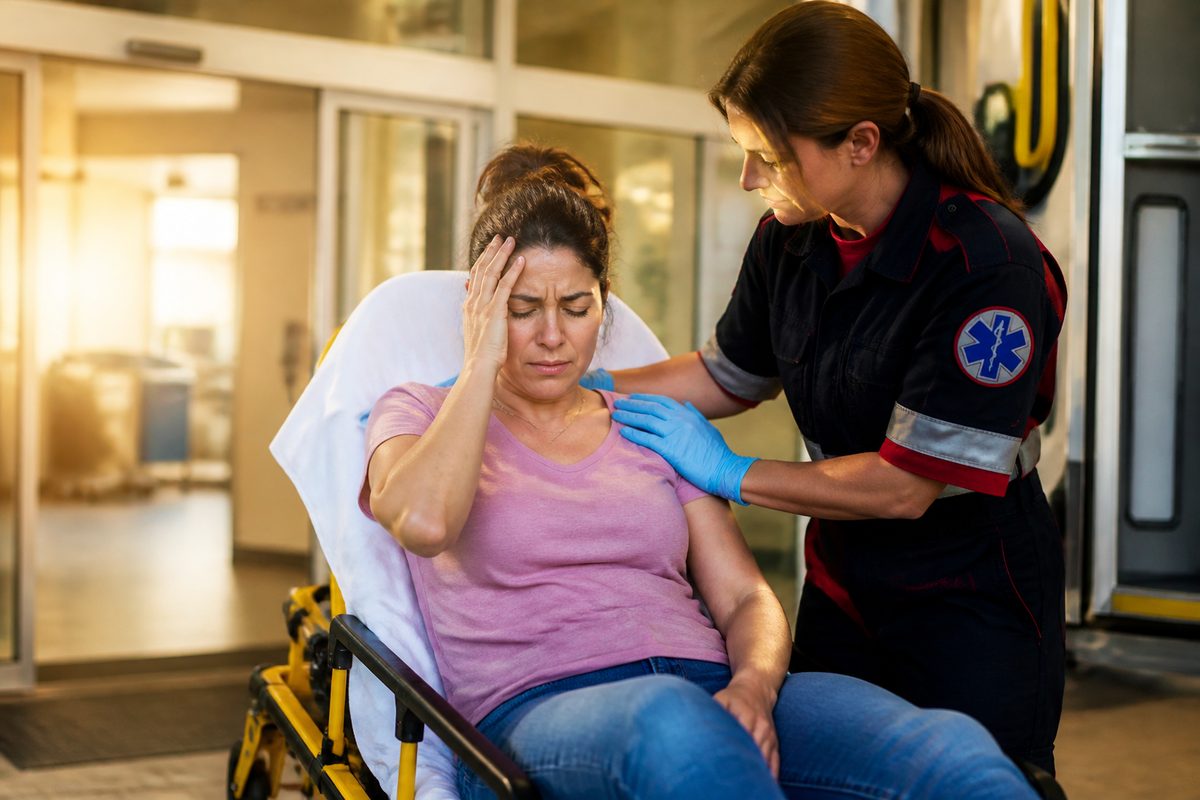
You should go to the emergency department (ED) for symptoms or injuries that could threaten life, a limb or long-term function, such as chest pain, severe shortness of breath, major trauma, a serious head injury, signs of a stroke, an overdose or thoughts of ending your life. In an emergency, call 000. This article is general information only. It isn't a diagnosis, and it can't tell you what's happening in your own body.
If you're unsure, healthdirect on 1800 022 222 offers health advice, and Queensland readers can call 13 HEALTH.
This page comes from the After Hours Care Guide, an independent guide to finding care in Australia. It's not a doctor service and can't book or send a doctor. Its job here is narrower than other pages on the site. It gives you a practical list of the situations that belong in an emergency department, and explains the thinking behind that list.
The test that sits behind every item on the list
A long list of conditions is hard to remember when you're frightened. A simpler test is easier to hold in your head. Ask yourself: could this be life-threatening? Could it cause permanent harm if it waits? Is it getting worse fast? If the answer to any of these is yes or maybe, treat it as an emergency.
Emergency departments are built for this kind of uncertainty. Staff sort patients by how urgent their condition is, not by who arrived first. So a person with a serious problem is seen quickly, while someone with a less urgent problem may wait for hours.
You don't need to be certain before you go. Most people can't tell a dangerous symptom from a harmless one. Trained clinicians would rather check you and send you home than have you stay away from a real emergency.
Signs that appear suddenly, feel severe, or feel unlike anything you've had before deserve respect. A rapid change matters more than a single reading or a single feeling. Trust your instincts too. If a family member says someone looks very unwell, that counts.
Chest pain and other warning signs from the heart
Chest pain is one of the best-known reasons to seek emergency care. It's also one of the most commonly delayed. Pain, pressure, tightness or heaviness in the chest can have many causes, and some are harmless. But the heart is an organ where time matters most, and you can't reliably tell the difference at home.
The discomfort doesn't always sit in the middle of the chest. It can spread to the arm, shoulder, neck, jaw or back. It may come with sweating, nausea, light-headedness or a sense of dread.
Some people, including many women and older adults, notice these other features more than the pain itself. If you suspect a heart problem, call 000. Don't drive yourself, and don't ask someone else to drive you. Emergency medical services can start checking you on the way, and the crew can tell the hospital to get ready before you arrive.
Breathing difficulty and shortness of breath
Shortness of breath that comes on suddenly, is severe, or stops you finishing a sentence is a reason to seek emergency care. So is breathlessness with chest pain, blue or grey lips, confusion, or a feeling that you can't get enough air. A person who is struggling to breathe can get worse fast. Waiting to see if it passes is risky.
Breathlessness also matters when it arrives alongside other changes. Think of a swollen, painful leg, a fever with a fast heartbeat, or a known lung or heart condition that suddenly feels worse. Allergic reactions that affect breathing, swelling of the face or throat, or a sense that the throat is closing are emergencies too. If someone has an emergency allergy plan, follow it and call 000 at the same time.
Mild breathlessness after climbing stairs when you're unfit is a different matter. But ongoing or worsening breathlessness is still worth raising with a medical professional promptly.
Stroke signs and sudden neurological changes
Treat these as emergencies: sudden weakness or numbness in the face, arm or leg, drooping of one side of the face, slurred or confused speech, sudden loss of vision, or a sudden, severe headache unlike any you've had before. Brain tissue is lost quickly when blood flow is blocked. Some treatments only work within a limited time window.
Note the time the symptoms began, because the hospital will ask. Call 000. Don't wait to see if the symptoms settle, even if they seem to improve.
Head injury and major trauma
Not every knock to the head needs the emergency department. Some do. A head injury needs urgent assessment if the person lost consciousness, seems confused or drowsy, vomits repeatedly, has a seizure, has a worsening headache, has fluid coming from the nose or ears, or is acting oddly.
Take extra care with a baby, a toddler, an older adult, or someone on blood-thinning medication. The risks can be higher, and symptoms can show up later.
Major trauma is a broader group. It covers serious road crashes, falls from a height, significant sporting, farm and workplace accidents, stabbings, gunshot wounds, serious burns and crush injuries. Any of these can cause internal injuries you can't see from the outside. A person may look fairly well at the scene and still have internal bleeding.
If the force involved was large, call 000. Don't move someone who may have a neck or back injury unless they're in immediate danger. Let the paramedics take over their care.
Other injuries that need emergency care include:
- Bleeding that does not stop with firm pressure.
- A deep wound, particularly to the chest, abdomen or neck.
- A limb that looks deformed, or a bone pushing through the skin.
- A hand, finger or foot that is cold, pale, numb or has lost its blood supply.
- A serious burn, especially to the face, hands or genitals, or one that covers a large area.
- A near-drowning, even if the person seems recovered.
Severe abdominal pain, including possible bowel obstruction
Belly pain is common and usually not serious. That's exactly why a dangerous cause can be missed. Go to emergency when the pain is severe, sudden, constant, or getting worse. Go when the belly feels rigid or very tender. Go when the pain comes with a fever, fainting, vomiting blood, blood in the stool, or black stools.
One cause doctors watch for is a bowel obstruction, where something blocks food and fluid from moving through the intestine. The warning pattern often includes cramping pain that comes in waves, a swollen abdomen, repeated vomiting, and being unable to pass wind or stool.
People who've had abdominal surgery can be at higher risk, though anyone can be affected. A blockage can cut off the blood supply to the bowel. It needs hospital assessment, not waiting at home.
Severe pain in the lower right abdomen belongs on the list. So does pain in the testicle (particularly in a teenager or young man), and severe abdominal or pelvic pain in someone who could be pregnant. If you think you may need surgery, don't eat or drink on the way unless the ambulance crew or hospital tells you otherwise.
Overdose, poisoning and mental health crises
A drug overdose is always an emergency. It doesn't matter if the drug was prescribed, bought over the counter, or illicit, or whether it was taken by accident or on purpose. Call 000 straight away. Don't wait for symptoms to appear, because some substances cause harm later.
If you can, tell the operator what was taken and roughly when, and keep any packaging for the ambulance crew. The same applies if a child may have swallowed something harmful. The Poisons Information Centre can also give advice, but call 000 first if the person is unconscious, having trouble breathing, or very drowsy.
Suicidal ideation is another reason to seek emergency help. If you or someone you know has thoughts of ending their life, has a plan, or feels unable to stay safe, call 000 or go to the nearest emergency department. Stay with the person, and don't do anything that would put you at risk.
This is a medical emergency, and you won't be wasting anyone's time. Crisis support services such as Lifeline on 13 11 14 are also available. But when there's immediate danger, 000 comes first.
Severe confusion, extreme agitation, or losing touch with reality can also need urgent assessment, particularly if the person may harm themselves or others.
Other situations where the emergency department is the right place
- Severe or uncontrolled bleeding, including heavy bleeding in pregnancy or after birth.
- Fainting or collapse, especially with chest pain, a racing heartbeat or breathlessness.
- A seizure that lasts more than a few minutes, repeated seizures, or a first-ever seizure.
- A high fever with a stiff neck, a rash that does not fade when pressed, or marked drowsiness.
- A baby under three months with a fever or a young child who is floppy, hard to wake, or struggling to breathe.
- Signs of severe dehydration, such as very little urine, a dry mouth, sunken eyes and dizziness, particularly in children and older adults.
- Sudden severe pain anywhere that stops you functioning.
- Sudden loss of vision or a serious eye injury.
This isn't a complete list. It's a guide to the kinds of problems that justify urgent assessment.
When something else may be a better fit than the emergency department
Many problems are urgent without being emergencies. A sprained ankle you can still put weight on, a minor cut, an ear infection, a mild rash, or a stomach bug in an otherwise well adult will often be handled well elsewhere.
Your usual primary care physician, or another doctor at your regular practice, knows your history. They can often see you the same day or soon after. Primary care is generally the best place for ongoing conditions, check-ups, repeat prescriptions and new but non-threatening symptoms.
An urgent care center, where one is available in your area, can treat minor injuries and illnesses outside normal practice hours. Services and names differ between states and regions, so check what's near you and what it treats before you rely on it.
Not sure whether you need one of these services or an emergency department? healthdirect on 1800 022 222 can help you work out the next step (13 HEALTH in Queensland). If a nurse advises you to go to hospital, follow that advice.
Here's a useful rule: going to the wrong place beats waiting at home with a dangerous problem. If you're worried enough to be reading this at night, it's fair to call for advice. If your symptoms change while you wait, reassess straight away.
Calling 000 or travelling yourself
Call 000 if the person is unconscious, struggling to breathe, has chest pain, has signs of a stroke, has lost a lot of blood, has a serious injury, or might get worse during the trip. Emergency medical services can begin treatment at your door and during the journey. They take you to a hospital equipped to deal with your condition. Paramedics also make sure the emergency department is ready when you arrive.
If you decide to go without an ambulance, don't drive yourself if you feel faint, have severe pain, or have vision changes. Ask someone else to drive. If the person gets worse on the way, pull over safely and call 000.
Costs, eligibility and what to bring
Public hospital emergency departments in Australia generally treat patients based on need. Costs and eligibility can differ depending on your Medicare status, whether you're a visitor from overseas, whether you're using private insurance, and whether you arrive by ambulance.
Ambulance costs also vary between states and territories, and between people with and without cover. Don't let worry about cost stop you from seeking emergency care. But do confirm current costs and eligibility with Services Australia or the provider.
If you can do so without delay, bring:
- Your Medicare card and any private health insurance details.
- A list of your current medicines and any allergies.
- The name of your regular doctor or practice.
- Any recent test results or hospital letters.
- A phone and charger.
If getting these things would delay you in a true emergency, leave without them. The team can sort out the paperwork later. Tell the staff when your symptoms began, how they've changed, and anything you've taken or done since then.
Key takeaways
- Go to the emergency department, or call 000, when a problem could threaten life, a limb or long-term function.
- Chest pain, severe shortness of breath, stroke signs, major trauma, a serious head injury, severe abdominal pain, overdose and suicidal ideation are all reasons to seek emergency help.
- You don't need to be certain. Triage nurses assess urgency, so being checked and sent home is a good outcome.
- For problems that are urgent but not dangerous, your primary care physician, a local urgent care center, or healthdirect on 1800 022 222 (13 HEALTH in Queensland) may be a better fit.
- Confirm current costs and eligibility with Services Australia or the provider, and do not delay emergency care because of cost concerns.
This article offers general information only and is not medical advice. If you think someone's life is in danger, call 000 now.
Knowing the signs and symptoms that point to a true emergency helps you decide when to go to the ER instead of waiting for an appointment with your regular Medical doctor. Chest pain or pressure, difficulty breathing, sudden weakness or numbness, confusion, slurred speech, severe bleeding, serious head injuries, and sudden severe pain should all be treated as urgent. If you are unsure whether your situation is an emergency, it is safer to seek immediate care, and the ER team can evaluate you and involve your Medical doctor afterward.