Is Icu and Emergency the Same Thing?
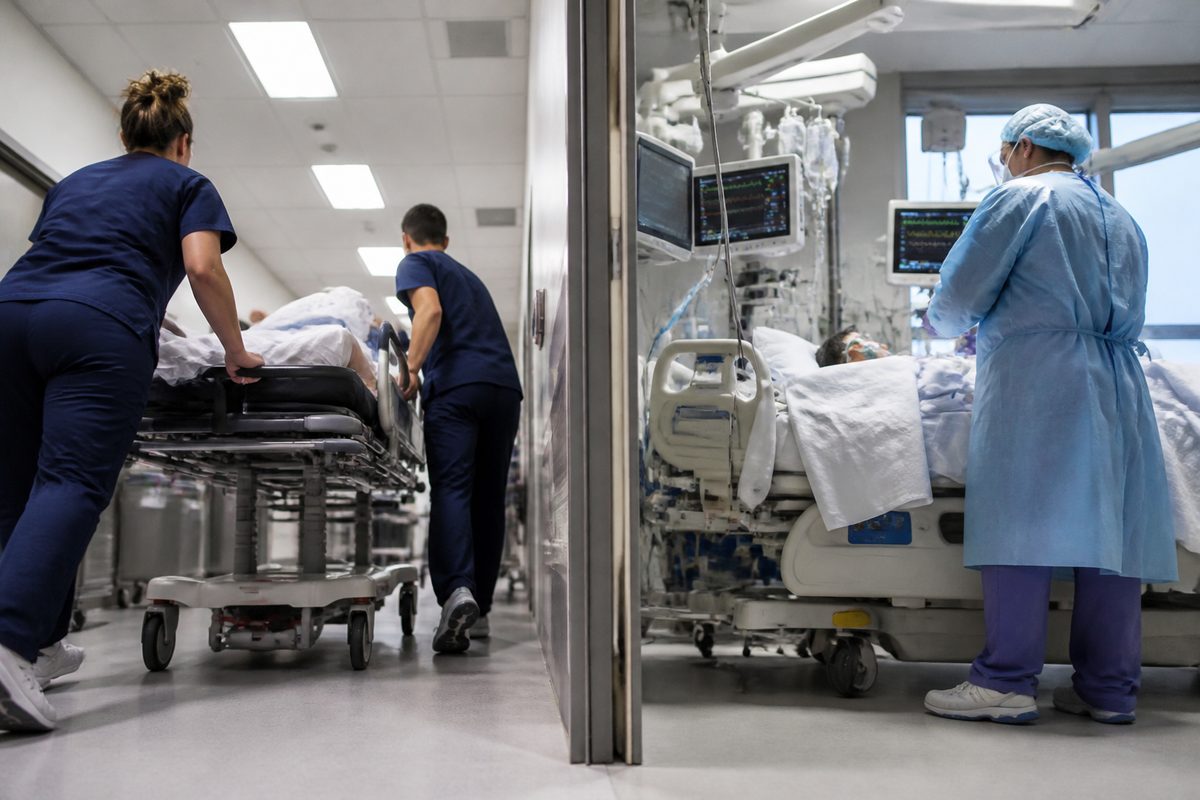
No, an ICU and an emergency department are not the same thing. The emergency department (ED) is the hospital's front door. People arrive unplanned, get sorted by how urgent they are, then get checked and stabilised. The intensive care unit (ICU) is a separate ward deeper inside the hospital. The sickest patients go there for constant, specialised monitoring and treatment, often for days or weeks.
The two work closely together, and a patient may pass from one to the other. But they have different jobs, different teams and a different pace.
This guide is general information only. It can't diagnose anything or tell you what to do about a particular person's symptoms. If you think someone's life is at risk, call 000 straight away. For health advice on whether to seek care, healthdirect is available on 1800 022 222, and Queensland readers can call 13 HEALTH. After Hours Care Guide is an independent information guide, not a medical service, and it cannot send or book a doctor.
Why the two get mixed up
It's easy to see why people blur them together. Both involve urgent care, bright lights, monitors and staff moving fast. TV dramas flip between the two as though they were one place. News reports may say a person is "in intensive care" after being "rushed to emergency", which sounds like a single event.
In reality, they sit at opposite ends of a patient's hospital journey. The ED is about the first hours: working out what's wrong and what must be done first. The ICU is about what comes next, when a person is so unwell that their body needs ongoing, organ-by-organ support.
Many people who visit an ED go home the same day. Only a small share ever need an ICU bed.
What the emergency department does
An ED is staffed around the clock to handle anything that walks, is wheeled or is carried through the door. Its specialty is emergency medicine, a field about fast assessment, immediate treatment and deciding what happens next. Emergency doctors and nurses deal with undifferentiated problems. That means they often don't know the cause when a person arrives, and they must work it out under time pressure.
Many people arrive at once, so an ED can't simply see them in the order they came in. Staff use triage, a quick check that puts each person in a priority group. Many hospitals use a framework known as the Emergency Severity Index, or a similar local scale, to sort people by how urgent their condition is and how many resources they're likely to need. Australian EDs commonly use a five-category national urgency scale.
Either way, the idea is the same. The most time-critical problems are seen first. That's why a person with a minor injury may wait while someone arriving after a serious collapse is treated at once.
After assessment and first treatment, an ED decision generally leads to one of a few outcomes:
- The person is treated and sent home with instructions to follow up, often with a GP.
- The person is observed for a short period, sometimes in a short-stay unit, before a decision is made.
- The person is admitted to a hospital ward for further care.
- The person is moved to a higher level of care, such as a high-dependency unit or the ICU.
So the ED is a place of assessment, stabilisation and sorting. It isn't built to give days of continuous organ support.
What the intensive care unit does
An intensive care unit looks after people with life-threatening illness or injury whose bodies need close, constant support. The medical specialty is called intensive care medicine, and intensive care specialists lead the team. They work with nurses who have advanced training in critical care nursing. These nurses often care for just one or two patients at a time, while a general ward nurse looks after many more.
The things that define an ICU include:
- Continuous monitoring of heart rhythm, blood pressure, oxygen levels and other measures, with alarms that alert staff to changes.
- Organ support, which may involve breathing machines, medicines given through drips to support circulation, or machines that take over kidney function.
- High staffing levels, with far fewer patients per nurse than on other wards.
- A longer timeframe, where the goal isn't just to stabilise a person but to support them while their body recovers.
Patients in an ICU are often sedated or very drowsy. Many can't speak because of a breathing tube. Visiting can be restricted, and families may feel overwhelmed.
Staff generally explain what the equipment is doing and welcome questions.
Life support: where the confusion often starts
The phrase life support adds to the muddle because it describes a group of treatments, not a place. It can mean a machine breathing for someone, drugs that keep blood pressure up, or the emergency steps used when the heart stops. Those treatments can start in an ED and carry on in an ICU.
Two terms are worth separating:
- Cardiopulmonary resuscitation (CPR) is the emergency technique of chest compressions, often with rescue breaths, used when someone's heart has stopped or they aren't breathing normally. Anyone can start it, including bystanders, and it can begin before an ambulance arrives. If you see someone collapse and not respond, call 000 and follow the operator's instructions.
- Advanced life support is a higher level of resuscitation done by trained clinicians. It adds tools such as heart rhythm analysis, defibrillation, airway management and intravenous access to basic CPR. Paramedics, ED teams and ICU teams may all be trained in it.
So when someone says a person was "on life support", it doesn't tell you whether they were in the ED, the ICU or an operating theatre. It only tells you that machines or treatments were helping an essential function.
The levels of care in between
Hospitals don't move patients straight from an ED to an ICU or to a standard ward. There are steps between, and knowing them clears up much of the confusion.
High-dependency unit
A high-dependency unit (HDU) sits between a general ward and an ICU. It gives closer monitoring and nursing than a standard ward, but it usually doesn't offer the full range of life-sustaining support. Some hospitals run HDU beds as part of the ICU, while others have a separate area.
A person might move to an HDU after surgery, or step down from the ICU as they get better.
Coronary care unit
A coronary care unit (CCU) focuses on heart conditions. Patients with serious heart rhythm problems, or those recovering from a heart attack, may be cared for there. They get continuous heart monitoring and staff who know cardiac conditions well. Not every hospital has one, and in smaller facilities heart patients may be cared for in a general ICU instead.
Specialist units for children and babies
Children and newborns have different bodies from adults, so larger hospitals have dedicated units for them. A paediatric intensive care unit (often written as a pediatric intensive care unit, or PICU) cares for seriously ill or injured children. A neonatal intensive care unit (NICU) cares for newborns who are premature or have serious health problems at birth.
Both have staff and equipment sized and trained for small patients. A child who arrives at an ED in a regional hospital may be stabilised there, then transferred to a specialist children's hospital if intensive care is needed.
How a patient moves from the ED to the ICU
Most ICU patients don't walk in from the street. They come from the ED, from an operating theatre, from a hospital ward whose patient has got worse, or by transfer from another hospital. Here's a simple picture of the ED pathway:
- Arrival and triage. A nurse assesses how urgent the problem is and assigns a priority.
- Assessment and stabilisation. The ED team checks airway, breathing and circulation, starts urgent treatment and arranges tests.
- Consultation. If the person is very unwell, an intensive care specialist may be called to review them, sometimes while resuscitation is under way.
- Decision on level of care. The teams decide whether the person needs a ward, an HDU or an ICU bed, based on how much support they need and what's available.
- Transfer. The patient is moved with monitoring and, if needed, equipment such as a portable breathing machine, along with trained staff.
Sometimes a patient waits in the ED for an ICU bed to free up. Then ED staff keep treating them, and ICU staff may help. Spending time in the ED doesn't mean the person gets a lower standard of care.
It does show that the ED is a holding and stabilising place, not a substitute for intensive care.
Examples of conditions that can lead to intensive care
People are admitted to an ICU for many reasons. These include major trauma, severe infection, complications after major surgery, serious heart or lung problems and certain neurological emergencies. One example often described in medical literature is acute respiratory distress syndrome (ARDS), a severe lung injury where the lungs can't supply the body with enough oxygen.
It's usually triggered by another serious illness or injury. People with ARDS commonly need breathing support that only an ICU can give over days or weeks.
This isn't a list for self-diagnosis. Whether someone needs intensive care is a clinical decision made by hospital staff after assessment. It can't be judged from home.
Therapy and treatment: what the difference means in practice
In the ED, treatment is aimed at immediate threats. In the ICU, therapy is ongoing and adjusted often as the patient's condition changes, sometimes hour by hour. Intensive care teams also include physiotherapists, dietitians, pharmacists and other allied health staff, and recovery therapy often begins while the person is still in the unit.
Rehabilitation after a long ICU stay can go on for months. Some people feel tired, weak or emotionally drained afterwards. Families may need support too.
A side-by-side comparison
- Purpose: The ED assesses, prioritises and stabilises. The ICU provides sustained, specialised support for critical illness.
- Who goes there: Anyone with an urgent problem may attend an ED. ICU admission is for those needing intensive monitoring or organ support.
- Length of stay: ED visits typically last hours. ICU stays often last days or longer.
- Staffing: The ED is led by emergency medicine clinicians. The ICU is led by intensive care specialists with critical care nurses.
- Entry: You can walk or be brought into an ED. You are usually admitted to an ICU after a clinical decision.
- Waiting: Triage means waiting times in the ED vary by urgency. ICU beds are allocated to those who need them.
What this means when you are deciding where to go
For most people, the practical question isn't about the ICU at all. You can't choose to go to an ICU. You can choose where to seek help for a new health problem, and the options generally include a GP, a pharmacy, a health advice line, an urgent care service, an ambulance or an ED.
If someone is unresponsive, has trouble breathing, has signs of a stroke, severe chest pain or serious bleeding, or you believe their life is in danger, call 000. Don't drive a seriously unwell person yourself if an ambulance is available, because paramedics can begin treatment on the way.
Not sure if it's an emergency? healthdirect on 1800 022 222 can offer health advice, and Queensland readers can ring 13 HEALTH. An independent resource such as After Hours Care Guide can help you understand the types of care available outside normal hours. It's only an information guide to finding care, though, and is not a medical or home visit service.
Costs and eligibility
Public hospital EDs and ICUs in Australia are generally available to Medicare-eligible patients. But eligibility, private health insurance arrangements, ambulance charges and out-of-pocket costs vary by state, circumstance and provider. Visitors from overseas may be treated differently.
Please confirm current costs and eligibility with Services Australia or the provider, since details change and can't be assumed.
Supporting someone who is in intensive care
If a friend or relative has been moved to an ICU, a few practical points may help:
- Ask which doctor or nurse is the best contact for updates, and when they're usually available.
- Write down questions between conversations so you can ask them efficiently.
- Ask about visiting arrangements, as they differ between hospitals.
- Look after yourself, with rest and food, because stays can be long.
- Ask about social workers or support staff, who are often available to families.
Medical teams know families are frightened. Most are happy to explain what the monitors, tubes and alarms mean.
Key takeaways
- The ED and the ICU are different parts of a hospital with different purposes.
- The ED is built for rapid assessment and stabilisation, guided by triage tools such as the Emergency Severity Index or similar scales.
- The ICU provides ongoing, specialised support for critical illness, led by intensive care medicine specialists and critical care nurses.
- Between them sit levels such as the high-dependency unit, coronary care unit, PICU and NICU.
- Life support, advanced life support and CPR describe treatments, not locations.
- In an emergency, call 000. For health advice, contact healthdirect on 1800 022 222, or 13 HEALTH in Queensland.
This article is general information only and is not medical advice. It does not replace assessment by a qualified health professional.